Our story · two founders · Utrecht

We built the software. Now, the gate.

Sallyport is built by two people who have spent more than fifteen years building and selling business software, and who sold their previous company to Exact, the largest business-software vendor in the Netherlands. This page is what we learned there, what we see moving now, and why we think the next interface needs a door.

Who we are

Two founders, one long habit.

We have worked together for most of those fifteen years, on software that companies run their day on: the invoices, the hours, the contacts, the ledger. We built Gripp from the two of us to thousands of customers and a team of dozens, and sold it to Exact. The unglamorous middle of a business is where we are from.

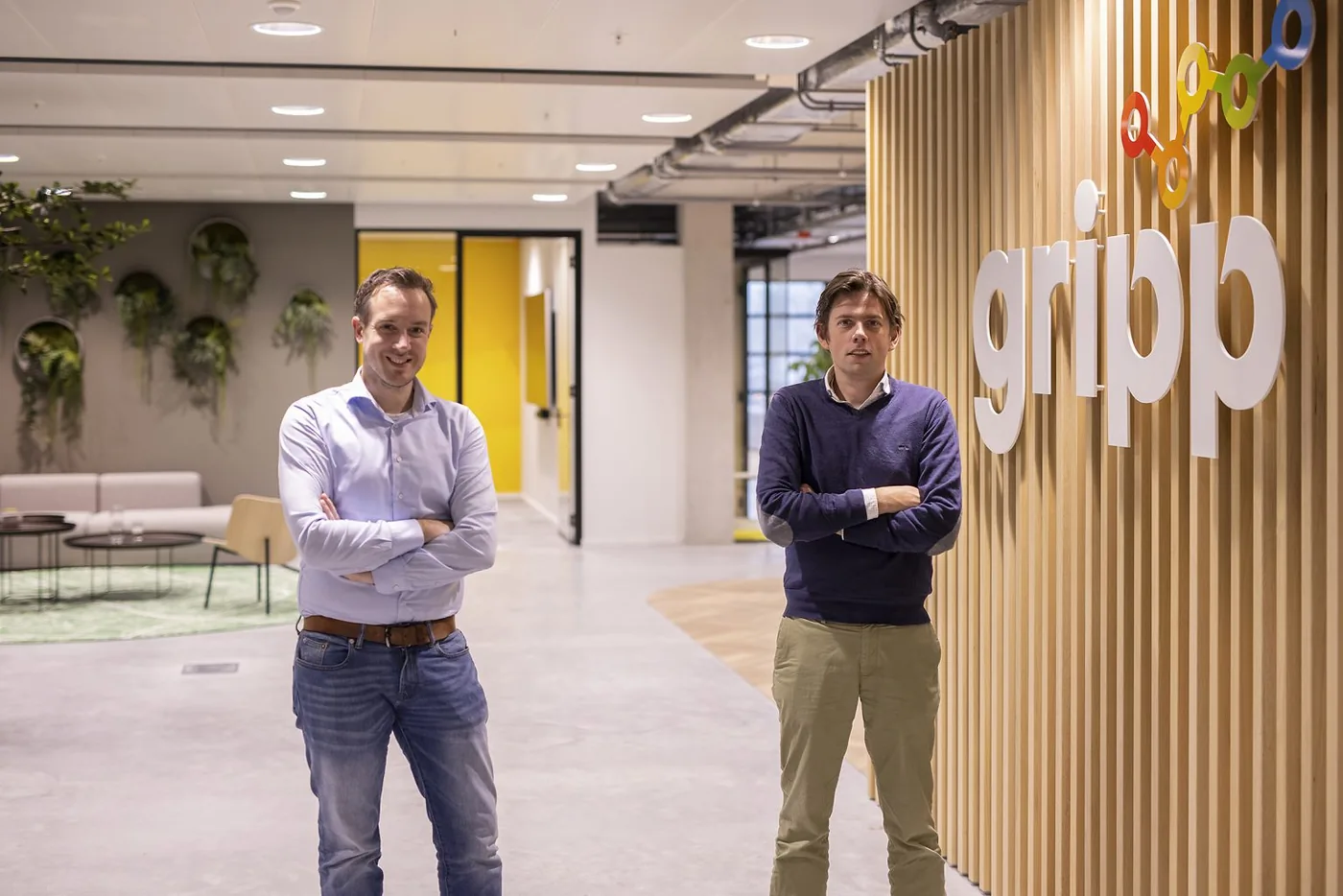
Jack and Marcel standing side by side in an office, arms folded.
Jack (left) and Marcel, at the Gripp office
M

Marcel

Co-founder

Co-founded Gripp with Jack and sold it with him. Fifteen-plus years spent closer to the customer: the reasons a company buys software, the reasons it quietly stops using it, and the gap between what a product does and what a person on a Tuesday actually needs from it.

The question he asks of every feature is whether anyone will use it.

J

Jack

Co-founder

Co-founded Gripp with Marcel, built much of what it shipped, and stayed through its sale to Exact. The same fifteen-plus years of software that other people’s businesses depend on, most of it in the parts nobody demos: who may see which record, what gets written where, and what the log says afterwards.

The question he asks of every feature is what the auditor will see.

Why first names only. We would rather you meet us on a call than on a page. The surnames will follow; the facts above — the fifteen years, what Gripp grew into, and the sale to Exact — are the ones this page rests on, and the ones you can ask us about.

Where we come from

The value was never the screens.

Our previous company, Gripp, made business software for companies much like the ones Sallyport is built for now: small and mid-sized, Dutch, running on a handful of systems that each hold a piece of the truth. We grew it from the two of us to thousands of customers and a team of dozens, and eventually sold the company itself to Exact, the largest business-software vendor in the Netherlands and one of the very systems our customers ran.

Fifteen years is long enough to watch the same product wear several different faces. What we shipped as a desktop program became a browser tab, and then a phone app, and each time the thing customers were paying for did not change. They paid for the data and for the rules around it — who may see what, who may change what, and whether you can prove it afterwards. The interface was only ever the medium of the day.

Being acquired teaches you something too. A sale is an audit: every claim you ever made about your software is checked by someone with no reason to believe you. We came out of it with a lasting preference for the kind of claim that can be checked, and Sallyport is written as if that person were reading along.

Gripp was acquired bythe largest business-software vendor in the Netherlands Exact

Jack and Marcel around a meeting-room table with some colleagues, a laptop open between them.
With some colleagues, back then: a customer’s problem on the table
Rights are the product.

In fifteen years the feature every serious customer asked about first was never a report or a dashboard. It was who can see what. Everything else was built on top of that answer.

The medium changes; the rules must not.

Every new front-end we shipped had to carry the same access model as the one before it, or the first customer to notice would have been an auditor.

Evidence beats reassurance.

“We take security seriously” is a sentence. A log that shows what happened, per call, is a fact. We were on the receiving end of that difference, and it stuck.

What we see moving

People are asking for a new medium. Again.

Every previous shift in how people reached their business software was built by the vendor. This one is not. The front-end people now want is an assistant they already have — and it belongs to nobody in your stack.

Then The desktop program

Installed on one machine, opened by one person, with its rights model built into every menu.

Built by the vendor
Then The browser tab

The same software, reachable from anywhere. The rights model came along, because the vendor rebuilt it into the new front.

Built by the vendor
Then The phone

A smaller screen and a bigger audience: people who never sat at the desktop now approved, logged and looked things up on the move.

Built by the vendor
Now The question

No menu, no screen. A person asks their assistant, and the assistant reaches into the systems. The front-end is one the vendor did not build.

Brought by the user
01 The demand is real, and it is coming from the floor.

Nobody in a finance team asked for a browser tab. They are asking for this. The people who used to wait for a colleague to look something up now expect to ask, in a sentence, and get the live answer — and when a company says no, they ask anyway, from a personal account, where nothing is filtered and nothing is logged.

02 Every vendor will ship its own AI. People want one.

Each system in your stack is adding an assistant of its own, and each of them knows only its own data. A person’s question does not respect those boundaries: it wants the hours from one system, the invoice from another and the contact from a third, in one answer. The assistant that wins is the one that sits above the stack, not inside one part of it.

03 The rights model does not travel.

For as long as there has been business software, the access rules lived inside the application’s own screens. The moment an assistant reaches the data over an API key instead, those screens are gone and so are the rules: a key gives everyone everything, filters nothing and logs nothing. That gap is not a product feature waiting to be built. It is the whole problem.

This is the shift we built Sallyport for. Not to be another assistant, and not to be another system of record — there are plenty of both, and yours are fine. Sallyport is the part that was always the vendor’s job and now belongs to nobody: the gate between the new medium and the old data, carrying the rights model across, per person, per call, with a log.

How we intend to earn it

Trust is not a feeling. It is a record.

We are asking companies to put a piece of our software between their people and their most sensitive systems. That is a lot to ask of a young company, so here is what we hold ourselves to, in the order you are likely to check.

We say what stage we are at.

Sallyport is in closed beta. Every button on this site says “Book a demo” rather than “Start free trial” because a demo is what actually happens, and we would rather you hear that from us than notice it.

We do not quote numbers we cannot evidence.

You will find no adoption percentages and no precise customer counts on this page. The facts it rests on are the years, what Gripp grew into, and the sale to Exact, and you are welcome to ask us about any of them.

Your data is not ours.

Hosted and processed in the EU, encrypted at rest, never used to train anything, and you remain the controller throughout. The Data Processing Agreement and the sub-processor list are public.

The log applies to us too.

Every call through the gate is a line in a record that nobody can quietly edit, and that includes us. If we ever had to answer for what our software did with your data, the answer is already written down.

No lock-in, by construction.

Your systems stay yours and keep their own APIs. Point an integration back at the raw vendor API and it carries on without us. We would rather be kept because we are useful than because leaving is hard.

We are two people you can reach.

A demo is with one of us, not a sales team, and the person who answers the contact form is the person who built the thing you are asking about.

See how the gate decides, per call. The masking, the row filters, the time-bound exceptions and the weekly report — the mechanism behind every promise above. Governed MCP →
“We spent fifteen years inside the software everyone’s assistant now wants to talk to. We know what it holds, and we know what it was built to protect. Sallyport is us making sure that protection survives the medium.” M J Marcel & Jack · Founders, Sallyport · Utrecht, Netherlands

Closed beta · EU-hosted · Every call logged

Meet us on a call. Bring your hardest question.

Half an hour with one of the two of us, on your own stack. If Sallyport is not the right fit, we will say so in the first ten minutes.